
Spark Plug Inspection
5-5prose procedureSpark plug part numbers split by fuel type (unleaded vs leaded gasoline) and make (NGK / ND). Optional plugs marked (*) are for 1.6 ℓ DOHC engines only (D16A8/D16A9).
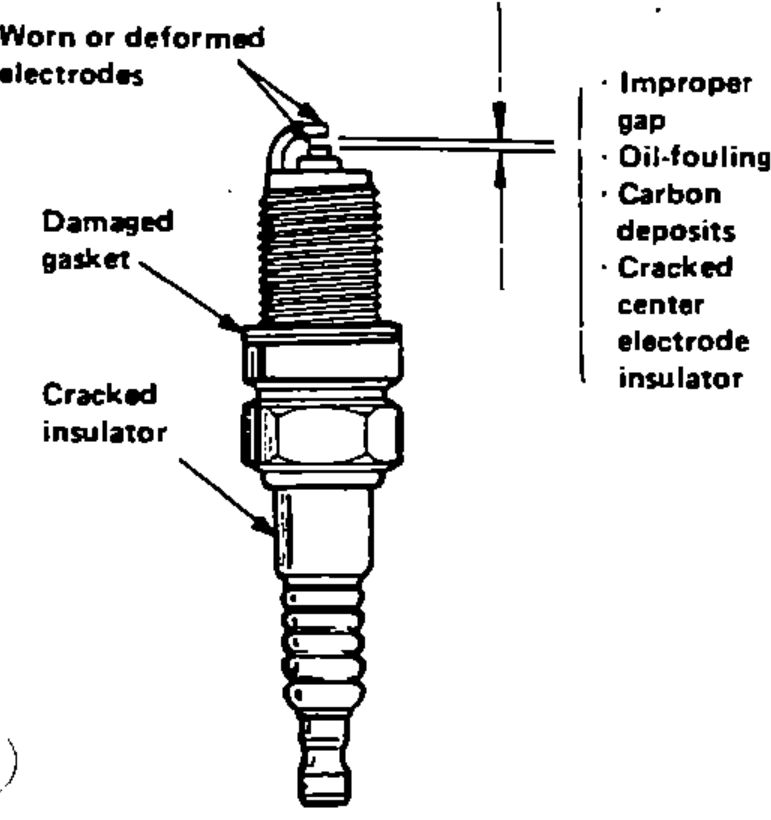
- 1Inspect the electrodes and ceramic insulator for: improper gap, oil-fouling, carbon deposits, cracked center electrode insulator, worn or deformed electrodes, damaged gasket, cracked insulator.
- 2Replace the plug if the center electrode is rounded as shown below.
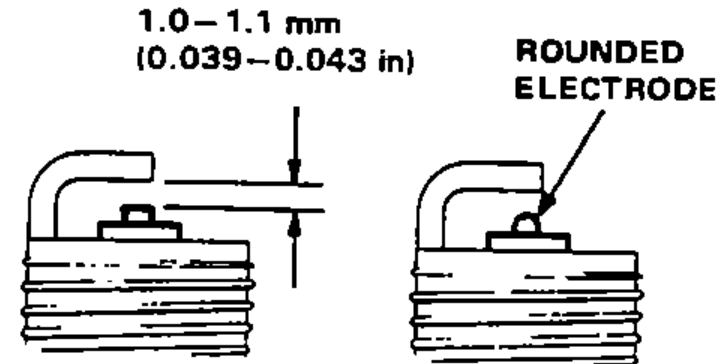
- 3Adjust the gap with a suitable gapping tool. Electrode Gap: 1.0-1.1 mm (0.039-0.043 in).
- 4Screw the plugs into the cylinder head finger tight, then torque them to 18 N·m (1.8 kg-m, 13 lb-ft).Apply a small quantity of anti-seize compound to the plug threads before installing.
Burned or worn electrodes may be caused by:
· Lean fuel mixture
· Advanced ignition timing
· Loose spark plug
· Plug heat range too high
· Insufficient cooling
Fouled plug may be caused by:
· Rich fuel mixture
· Retarded ignition timing
· Oil in combustion chamber
· Incorrect spark plug gap
· Plug heat range too low
· Excessive idling/low speed running
· Clogged air cleaner element
· Deteriorated ignition coil or ignition wires
Unleaded gasoline
MakeNGK
StandardBCPR6E-11
OptionalBCPR6EY-N11 / BCPR7E-11 / BCPR7EY-N11
Unleaded gasoline
MakeND
StandardQ20PR-U11
OptionalQ22PR-U11
leaded gasoline
MakeNGK
StandardBCPR6E-11
OptionalBCPR5E-11 (*) / BCPR7E-11
leaded gasoline
MakeND
Standard20PR-U11 / 20PR-UL11 (*)
Optional16PR-U11 (*) / 16PR-UL11 (*) / 20PR-U11 (*) / 22PR-U11 / 22PR-UL11 (*)
NOTE
(*): 1.6 ℓ DOHC only