
Battery - Test
16-28prose procedureTest
NOTE
To get accurate results, the temperature of the electrolyte must be between 15 and 38°C (59 and 100°F) before testing.
Test Equipment Required:
• Battery tester with: Voltmeter with 0–18 V scale, Ammeter with 0–100 A and 0–500 A scales, and a carbon pile with 0–300 W.
• 12 V Battery Charger: Fast charge capability of 50 A and slow charge capability of 5 A.
Test Procedure:
WARNING
Keep sparks, flames and cigarettes away while charging battery.
CAUTION
Battery electrolyte is a sulfuric acid solution.
• If it spills on painted surfaces, clothing, or skin, rinse it off with water immediately to minimize the damage.
• Always wear safety goggles or a face shield when servicing a battery.
- 1Check for damage: If the case is cracked or the posts are loose, replace the battery.
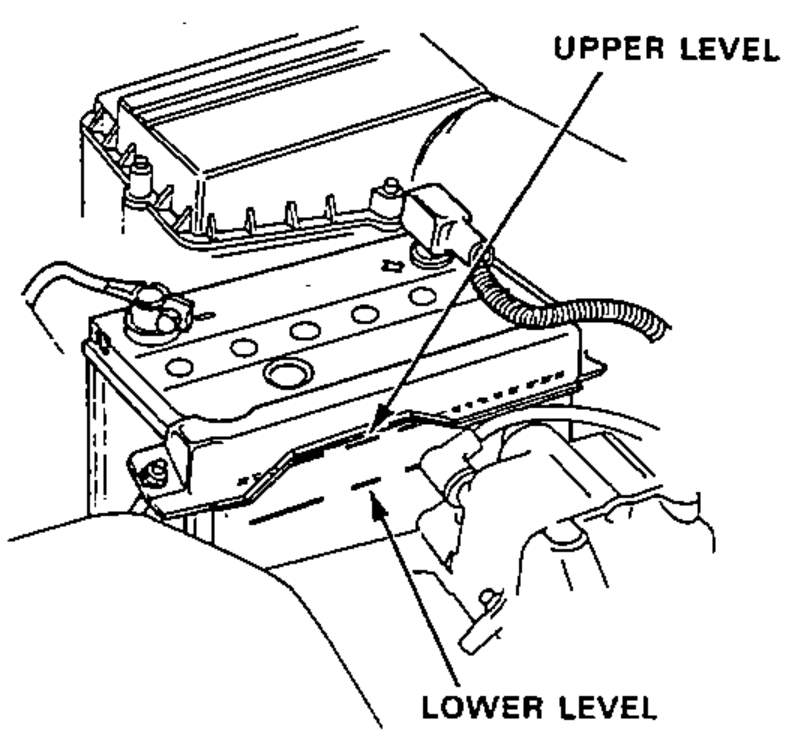
- 2Check the battery electrolyte level: Check the electrolyte level in each cell. If it's low, add distilled water until the electrolyte rises to the UPPER mark.
- 3Test battery load capacity by connecting a battery tester, and applying a load of 3 times the battery ampere hour rating. When the load has been applied for exactly 15 seconds, the battery voltage reading should stay above 9.6 V.CAUTION: Amperage will drop as voltage increases; do not increase the amperage to compensate or you may damage the battery.Watch the battery voltage during the entire 3 minutes; the highest reading should stay below 15.5 V.